How to Recognize and Support Your Highly Sensitive Child’s Needs — with Dr. Judith Orloff
Are you ready to lose that overwhelming sense that “something must be wrong with me” and learn, instead, to embrace this HSP gift God’s given you? The Sensitive & Strong Community Cafe is now open to new members!
by Dr. Judith Orloff
Raising a highly sensitive child is both a joy and a challenge. These children are compassionate, intuitive, and creative. They feel emotions more intensely and often have a natural connection to people, animals, and nature.
I too, was a highly sensitive child. Growing up, I received little support—not because my parents didn’t love me, but because they didn’t understand my needs. That sense of invisibility and feeling different shaped my passion for helping parents today as a psychiatrist.
It is also why I’m so passionate about my new children’s book, The Highly Sensitive Rabbit. The picture book is about a caring cottontail named Aurora who learns to embrace her gifts of empathy and sensitivity and discovers self-care techniques, such as setting healthy boundaries.
Sensitive children have their own special challenges. Their nervous system is easily reactive. Highly Sensitive children can be sensitive to strong food smells, harsh perfumes, bright lights, or loud talking. They prefer soft clothes, beauty, nature, and having one or a few close friends rather than lots of acquaintances. Since many empathic children can’t identify or articulate the cause when they become upset, attuned parents can help them identify triggers and offer solutions.
Parents need to know what overstimulates their empathic children and regulate exposure to those activities. Doing so calms them and wards off exhaustion, tantrums, and anxiety. Common triggers include: excessive busyness, not enough alone time, and violent television programs or newscasts, especially at night. Also, empathic children can feel and absorb other people’s emotional discomfort, especially from parents and close friends. Because they are “super-responders,” their hurts cut deep and their joys are extra-joyous.
Unfortunately, society often misunderstands Highly Sensitive Children. Doctors and teachers can label them as “shy,” “antisocial,” or “fussy.” Sometimes they are misdiagnosed with anxiety or depression. Because of these misconceptions, your role is critical in supporting their sensitivities, intuition, creativity, and wisdom — and in teaching them tools to cope with the world.

6 Tools to Help Raise Highly Sensitive Children
1. Encourage your children’s sensitivities and intuition
Invite your children to speak openly to you or to supportive others about their abilities, such as your pastor and church members. Teach your children to value their uniqueness and trust their gut feelings and inner voice. Then they will see their gifts as natural. These conversations will help your children understand themselves and feel seen.
2. Honor your children’s feelings
Listen carefully to what your children feel and respect it. This may mean allowing them the occasional day off from school to wind down or letting them play alone in their room more. Let your kids participate in gatherings their way (even if it’s crawling under the table). Just let them stay on the sidelines where they can observe and absorb without becoming overwhelmed.
3. Encourage your children to take alone time to be quiet and creative
Empathic children thrive on free, unstructured time to be creative and allow their imaginations to wander. They recharge and calm down when they are alone — reducing their stimulation level. Permit them to have regular time-outs, especially if they’re cranky, whiny, or overwhelmed.
4. Intervene before tantrums
If your children are upset or on the verge of a tantrum, dim the lights to soften the environment and turn on relaxing music. Sometimes it’s useful to play nature sounds like flowing water. Invite them to slow down and take some long, deep breaths. Teach them to exhale negativity and stress and breathe in peacefulness.
5. Educate family members and teachers
Do not allow others to judge or criticize your children or tell them that they need to “toughen up” if they are easily hurt or upset. Because the school environment can be harsh and unsupportive of sensitive children, educate your child’s teachers about their gifts and tendency for sensory overload. Ask them to support your children if they are bullied or teased at school.
6. Reduce exposure to stimulating situations
Because sensitive children can become irritable with too much sensory input, limit your time in highly stimulating environments such as Disneyland or other amusement parks. Two to three hours may be the maximum for them, although others in your party can tolerate more.
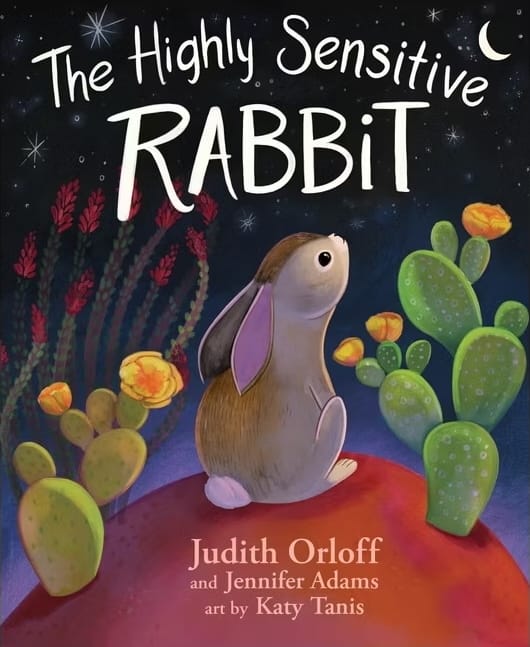
When you honor your child’s sensitivity, you give them the greatest gift: the freedom to see their differences as strengths.
With your guidance, their empathy, intuition, and creativity can blossom—not despite their sensitivity, but because of it.
(Adapted from The Highly Sensitive Rabbit by Judith Orloff, MD and Jennifer Adams)

Dr. Judith Orloff is a New York Times best-selling author, a psychiatrist, and a Highly Sensitive Person. She’s the author of the new children’s book The Highly Sensitive Rabbit—a sweet story about a caring cottontail who’s shamed for her sensitivities but learns to embrace them.
Dr. Orloff has also written The Genius of Empathy, The Empath’s Survival Guide, and Emotional Freedom. In her medical practice, she specializes in helping Highly Sensitive Persons navigate life with greater understanding and self-compassion.
Through her writing and teaching, she helps people embrace their sensitivity, steward their physical and emotional resources, and live with greater peace and purpose.
She’s also spoken at Google-LA and TEDx. You can learn more at DrJudithOrloff.com.